

FACT-CHECKING & VERIFICATION
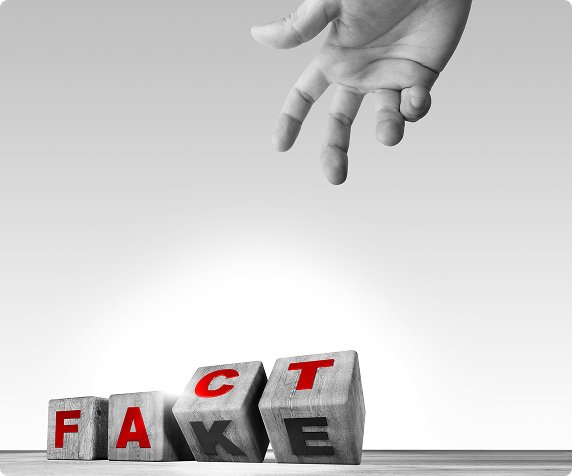
Goal: Combat misinformation and disinformation.
Topics: Verifying sources, reverse image search, fake news detection, field tools.
Impact: Protect public discourse and community trust.

DATA JOURNALISM
Goal: Tell powerful stories using evidence
Topics: Data sourcing, visual storytelling, spreadsheets, ethics.
Impact: Empower local voices through credible, databacked narratives.

DIGITAL SAFETY
Goal: Stay secure in a connected world.
Topics: Online scams, password protection, secure communication, safeguarding digital footprints.
Impact: Build confidence and safety in digital interaction.

CLIMATE REPORTING
Goal: Report the climate emergency with clarity.
Topics: Science basics, grassroots impact, solutionbased reporting.
Impact: Drive climate awareness and action in local ecosystems.

COMMUNITY RESILIENCE
Goal: Strengthen neighbourhood-level networks.
Topics: Disaster preparedness, local coordination, emergency response.
Impact: Forge stronger, self-reliant communities.

LEGAL AWARENESS
Goal: Empower citizens with legal knowledge.
Topics: Fundamental rights, gender justice, navigating legal aid.
Impact: Enable informed civic participation and justice-seeking.

MENTAL HEALTH
Goal: Normalise mental wellness conversations.
Topics: Stress management, destigmatisation, support channels.
Impact: Promote mental resilience and care within communities.

DIGITAL MARKETING
Goal: Build your online brand or business.
Topics: Content creation, platform algorithms, audience growth.
Impact: Turn passion into livelihood with digital skills.

ARTIFICIAL INTELLIGENCE
Goal: Understand and apply AI tools in daily life.
Topics: Machine learning basics, ethical use, realworld examples.
Impact: Make AI accessible for everyday use and community innovation.

SENIOR CITIZENS’ DIGITAL INCLUSION
Goal: Bridge the digital divide for the elderly.
Topics: Using smartphones safely, online payments, spotting scams, introducing convenient Apps, WhatsApp/YouTube literacy.
Impact: Help seniors connect confidently, access services, and protect themselves online.

GENDER-SENSITIVE REPORTING
Goal: Report gendered experiences with care and dignity.
Topics: Using Language, framing, representation across gender identities including LGBTQIA+ communities.
Impact: Support inclusive, accurate and empowering storytelling in public discourse.

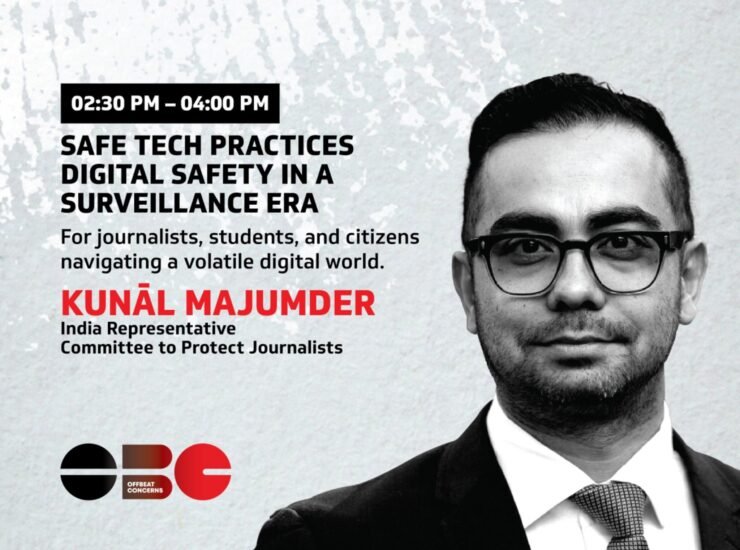
Defending Press Freedom: Safety, Rights, and Resilience in the Age of Media Capture
<p>Kunal Majumder, India Representative for the Committee to Protect Journalists (CPJ), brings a wealth of experience at the intersection of press freedom, politics, and human rights. Majumder has reported for <em>Tehelka</em>, <em>Indian Express</em>, and <em>VICE</em>, with a focus on media capture, governance, and rights-based issues.</p><p>His workshop will be rooted in lived experience. As part of CPJ, Majumder has documented press freedom violations across India and organized safety trainings for journalists in high-risk environments, such as Uttar Pradesh — work that earned him the Jan Mitra Award. These sessions are hands-on, built around case studies giving participants practical insight into threats and strategies for resilience</p><p>Complementing this is a legal awareness module that equips participants — both journalists and citizens — with knowledge of their fundamental rights, gender justice, and avenues for legal recourse. Drawing on CPJ’s advocacy with Indian, US, and EU governments, Majumder introduces participants to constitutional protections, anti-harassment laws, and reporting mechanisms for rights violations. His teaching experience as visiting faculty at Jamia Millia Islamia ensures this knowledge is presented in accessible, actionable ways.</p><p>Global exposure through programmes like the EU Visitors’ Programme and Finland’s Foreign Correspondents’ Programme allows him to integrate comparative perspectives on press freedom, gender equity, and legal safeguards. As part of CPJ’s Emergencies team, he has also overseen nationwide journalist safety workshops and authored reports documenting targeted violence against media professionals.</p><p>Uniquely, Majumder’s sessions also foreground mental health and resilience. He addresses stress management in high-pressure environments and draws from his engagement with Tibetan Buddhist practices to encourage collective care and destigmatization of mental health struggles — a rare but crucial component in discussions on media safety.</p><p>Overall, his workshops equip participants to build justice-seeking, self-reliant networks that can withstand threats to free expression and civic discourse — whether through legal awareness, community resilience, or practical safety measures in the face of challenges like phone tapping and surveillance, as highlighted in his 2024 CPJ reports.</p><p>Complementing this is a legal awareness module that equips participants — both journalists and citizens — with knowledge of their fundamental rights, gender justice, and avenues for legal recourse. Drawing on CPJ’s advocacy with Indian, US, and EU governments, Majumder introduces participants to constitutional protections, anti-harassment laws, and reporting mechanisms for rights violations. His teaching experience as visiting faculty at Jamia Millia Islamia ensures this knowledge is presented in accessible, actionable ways.</p><p>Global exposure through programmes like the EU Visitors’ Programme and Finland’s Foreign Correspondents’ Programme allows him to integrate comparative perspectives on press freedom, gender equity, and legal safeguards. As part of CPJ’s Emergencies team, he has also overseen nationwide journalist safety workshops and authored reports documenting targeted violence against media professionals.</p><p>Uniquely, Majumder’s sessions also foreground mental health and resilience. He addresses stress management in high-pressure environments and draws from his engagement with Tibetan Buddhist practices to encourage collective care and destigmatization of mental health struggles — a rare but crucial component in discussions on media safety.</p><p>Overall, his workshops equip participants to build justice-seeking, self-reliant networks that can withstand threats to free expression and civic discourse — whether through legal awareness, community resilience, or practical safety measures in the face of challenges like phone tapping and surveillance, as highlighted in his 2024 CPJ reports.</p>
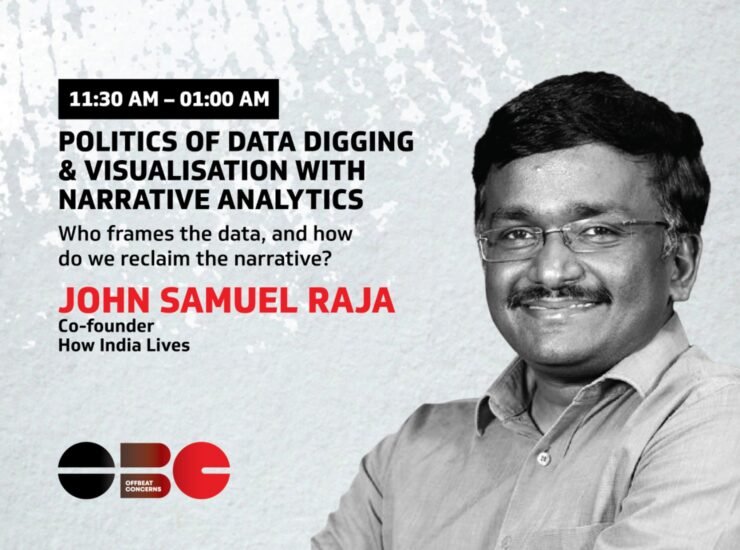
Telling Stories with Data: Unlocking Public Records for Journalism and Civic Action
John Samuel Raja, founder of <em>How India Lives</em> (HIL) — a Delhi-based data search and visualization startup — conducts sessions on data journalism that emphasize using public data for storytelling and decision-making. An economist and former financial journalist with <em>The Economic Times</em> and <em>Mint</em>, Raja specializes in breaking open data silos and making complex information accessible, even for those without prior technical expertise.
His sessions are designed to show how credible, evidence-based stories can empower local voices. Core topics include sourcing public data from government portals, applying spreadsheet tools like Excel for analysis, creating visual narratives with platforms such as Tableau or Google Data Studio, and understanding the ethics of data handling to avoid bias. Raja illustrates these concepts through <em>How India Lives</em> projects, such as the <em>Smart Cities Tracker</em>, which highlights patterns in infrastructure and economic development.
The workshop is interactive, with participants working hands-on to query datasets and build visualizations. In one exercise, for example, Raja has demonstrated how fertility rates can be correlated with private hospital births to provide insights for market analysis — a method he previously showcased in a 2020 YouTube talk on customer understanding with data. His experience as a Tow-Knight Fellow at City University of New York, where he conceived HIL to make public data searchable and visual, shapes the session’s emphasis on overcoming barriers like unstructured PDFs or fragmented datasets.
Raja’s entrepreneurial journalism background also brings an inclusive dimension: he conducts training in regional languages for grassroots groups such as women’s collectives and local governance bodies. The aim is to strengthen civic participation, a goal HIL has advanced since its 2015 launch, serving over 30 clients and uncovering instances of corporate malpractice through public records.
Beyond journalism, Raja introduces participants to the basics of artificial intelligence and machine learning in everyday applications, always with a focus on ethical use. Drawing on case studies — from urban planning in Gurgaon to corporate accountability — his sessions encourage critical questioning and practical outcomes, with participants often leaving with visual reports that spotlight local issues.
By bridging the digital divide, Raja enables content creators, community leaders, and political stakeholders to turn raw data into actionable insights. His contributions to events like <em>The Media Rumble</em> further highlight the central role of data in shaping narratives around economy, governance, and civic life.
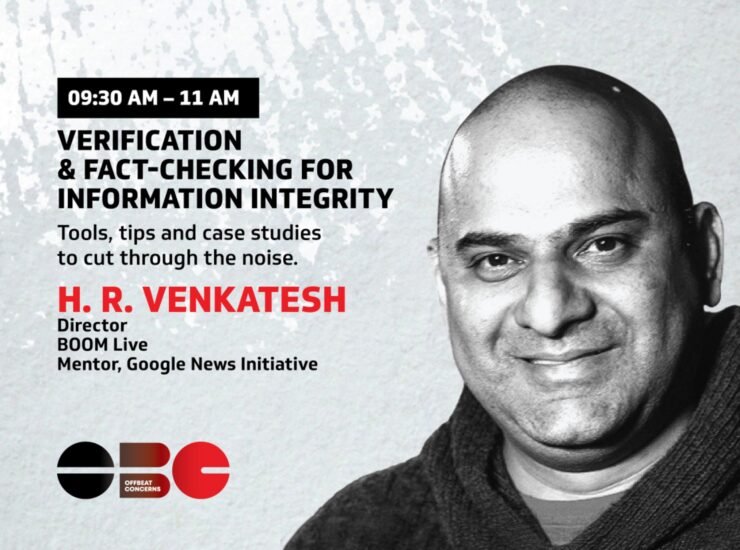
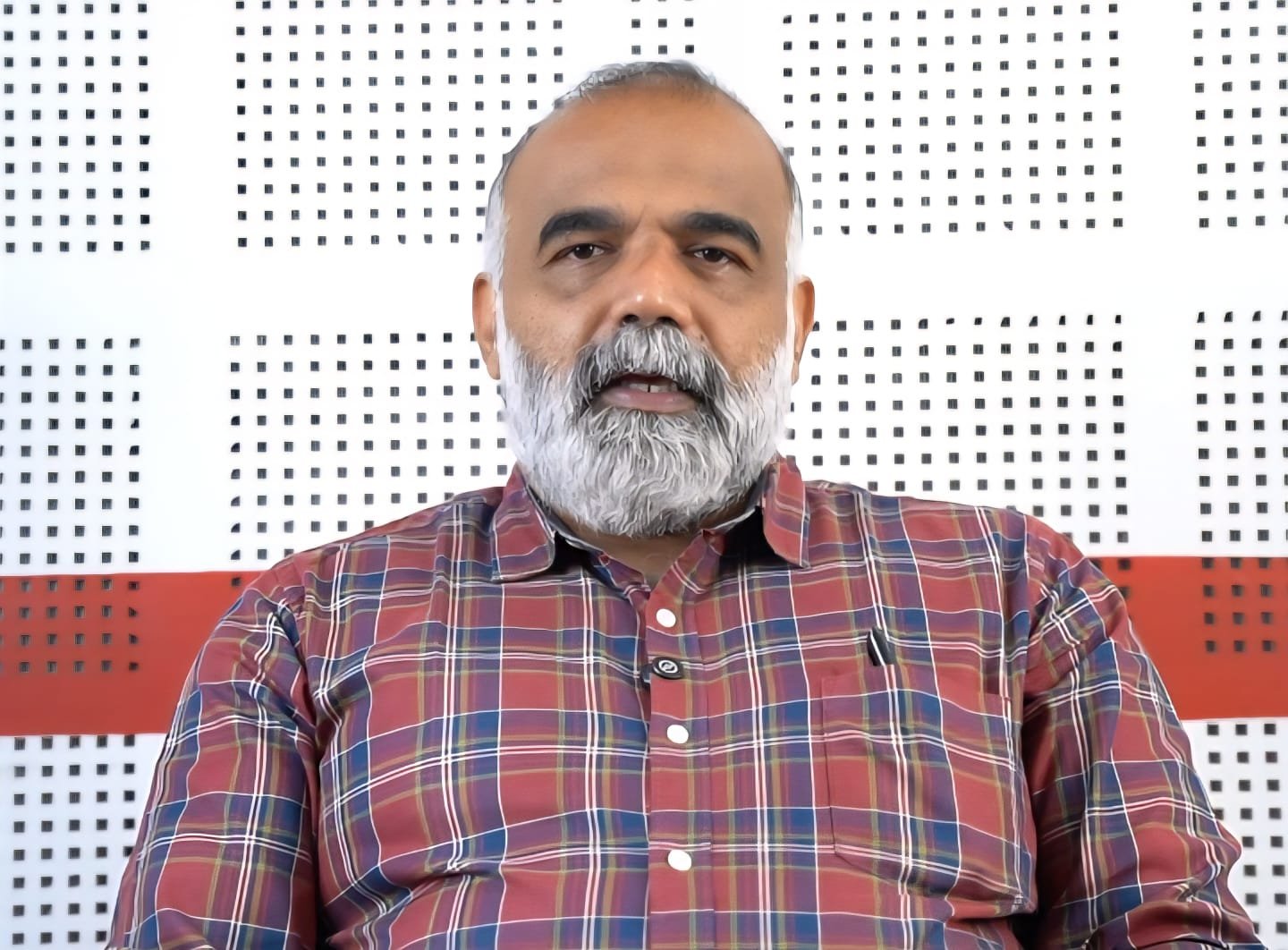
Inside the Fact-Checker’s Toolbox: H. R. Venkatesh on Combating Fake News
R. Venkatesh, Director of Training and Research at BOOM Live, leads engaging sessions on fact-checking, verification, and digital safety, drawing on his deep expertise in tackling misinformation. A former John S. Knight Journalism Fellow at Stanford University and ICFJ Knight Fellow, he has pioneered initiatives like <em>Media Buddhi</em>, a media literacy programme that equips participants to navigate the digital landscape safely and ethically.
His workshops aim to protect public discourse and restore community trust by addressing real-world challenges faced by journalists, students, and community leaders. Participants are introduced to practical tools and methods: verifying sources through cross-referencing, conducting reverse image searches with Google Reverse Image or TinEye, spotting fake news through patterns in viral content, and applying geolocation tools for field verification. Attendees also learn to identify red flags in online information — such as inconsistent metadata or manipulated media — insights rooted in Venkatesh’s work tracking disinformation during India’s 2019 elections.
The sessions are highly interactive, with hands-on exercises where participants analyze sample social media posts and practice debunking false claims. Drawing on his experience founding the <em>Ekta News Coalition</em> in 2018 — a collaboration with partners like BBC and India Today that piloted joint verification during the Rajasthan elections — Venkatesh ensures the training remains localized, inclusive, and multilingual, addressing community-specific concerns.
His prior roles as Senior Anchor at CNN-IBN and founding editor of <em>The Quint</em> bring a strong ethical dimension, emphasizing the importance of credibility and responsible storytelling. As an ICFJ Knight Fellow, he restructured newsroom training curricula in India, building data and multimedia skills for more rigorous reporting on health, development, and governance.
Grounded in collaborations with global institutions such as the Pulitzer Center, his workshops empower local voices with practical, data-driven strategies. Participants leave with actionable tools — from creating personal verification checklists to applying fact-checking techniques in their own communities. Through initiatives like BOOM’s teen workshops on online safety, Venkatesh has already shown real-life impact, making the digital world less opaque and more accountable.
Ultimately, his sessions go beyond skills training: they cultivate civic awareness, strengthen resilience against misinformation, and inspire participants to become active defenders of truth in their own contexts.
 Articles
Explore Our Blogs
21. 08. 2025
21. 08. 2025